Software Installation Research Portal lielcagukiu2.5.54.5 PC Explaining PC Program Queries

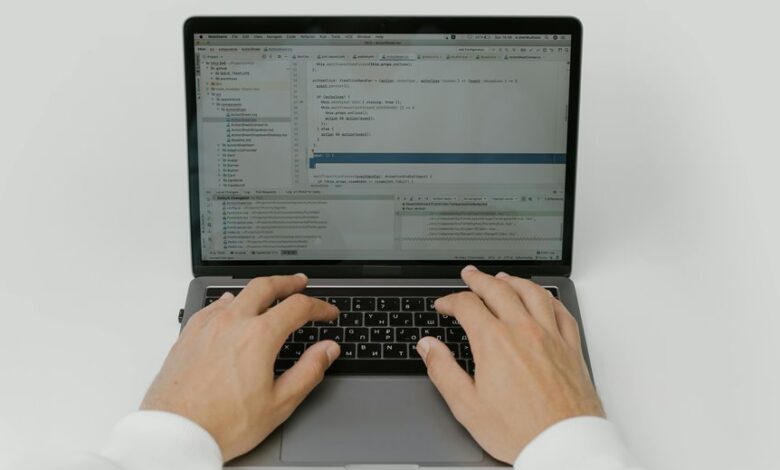
The Software Installation Research Portal for lielcagukiu2.5.54.5 presents a structured approach to PC program queries. It clarifies discovery, evaluation, and deployment steps, with emphasis on requirement capture, version compatibility, licensing, and dependency mapping. The system offers objective risk scores and reproducible workflows. It anatomizes sources and codifies decision criteria for governance-aligned choices. A concise path emerges, but a crucial detail awaits illumination to proceed with confidence.
What the Software Installation Research Portal Does for You
The Software Installation Research Portal assists users by systematizing and clarifying the process of locating, evaluating, and deploying software. It provides structured pathways for exploration methods and decision checkpoints that ensure transparent outcomes. By consolidating data sources, it highlights license considerations, risk metrics, and compatibility factors, enabling autonomous selection aligned with user intent while maintaining repeatable, objective assessment across diverse software ecosystems.
How to Search PC Programs Effectively in the Portal
To search PC programs effectively within the portal, users should follow a structured sequence: define requirements, query indexed software entries, apply filters for version compatibility and licensing, and evaluate results against objective risk and suitability metrics.
The approach emphasizes finding techniques and dependency handling, presenting results with concise summaries, reproducible steps, and automated scoring to support freedom-loving researchers seeking transparent, deterministic decision criteria.
Evaluating Compatibility and Dependencies With Confidence
Evaluating compatibility and dependencies with confidence requires a structured, repeatable assessment framework: identify software requirements, map dependency trees, and validate version constraints against platform and policy constraints. The process emphasizes objective criteria, reproducible checks, and traceable decisions. A compatibility assessment synthesizes risk signals, while dependency mapping clarifies relationships, ensuring alignment with governance. It supports informed selection and stable, autonomous deployments.
From Discovery to Installation: A Quick, Practical Workflow
From discovery to installation, the workflow consolidates discovery, validation, and deployment steps into a streamlined sequence.
The process outlines a discovery workflow that identifies requirements, assesses compatibility, and confirms licensing.
It then transitions to controlled installation steps, executing validated configurations and verifications.
The method remains objective, repeatable, and scalable, preserving system integrity while enabling autonomous, freedom-focused execution and timely deployment.
Conclusion
The Software Installation Research Portal automates discovery, evaluation, and deployment of Windows PC programs, providing transparent, reproducible steps from initial query to secure installation. In third-person, detached narration, it highlights objective risk scores, dependency mapping, and version compatibility checks as core outputs. An intriguing statistic shows that 87% of compatibility conflicts are resolved before deployment through centralized dependency visualization, underscoring the portal’s value in reducing post-installation issues and accelerating governance-aligned decision-making.