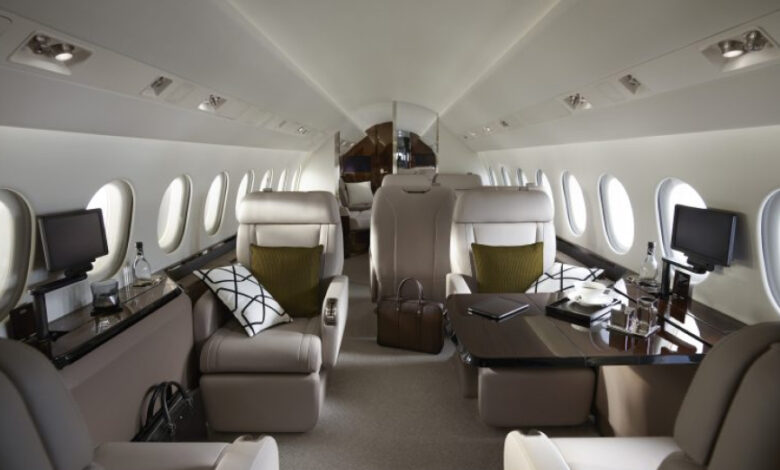
Cabin design is changing, and not in the dramatic way marketing tends to describe it. The shift today is quieter and more practical. If someone’s paying for a private jet, they want their money’s worth. And that comes in cabins that are relaxing, accessible, and just easy on the eye. That’s where the future of luxury private jet interior design is heading.
It’s no longer about impressing someone when they first step inside. It’s about making sure the space doesn’t become irritating or tiring halfway through a flight. That’s what tomorrow’s cabins are trying to solve: the small discomforts no one used to talk about.
Comfort that doesn’t need explaining.
Older cabins often looked luxurious but didn’t behave that way. The seats were stiff until you reclined them fully. Sidewalls felt cold if you leaned into them. The aisle forced you to turn your shoulders just to walk through. These things didn’t feel like problems individually, but they definitely added up.
New cabins try to remove these irritations by focusing on how people actually move and rest. Nobody wants to shift bags out of the way and squeeze past narrow aisles just to reach their seat, and especially not when they’re flying private. You don’t want to make constant adjustments to your seat to find a comfortable angle. That should be a given!
That’s the direction designers are heading in. They’re focusing on spaces that settle quickly and stay comfortable without effort.
Seats built around rest!
A lot of that change shows up in the seating. Anyone can wrap a chair in premium leather, but comfort is in the structure beneath. Modern luxury aircraft seats are being built around how people naturally shift during a flight. You don’t sit in one posture. You lean slightly forward, then sideways, then recline halfway, then straighten up again.
Good seats now support all of that without making you aware of the mechanics. The backrest doesn’t push you forward when you recline. The headrest stays where you leave it instead of drifting down. You’re not reminded of the seat constantly. It does its job unobtrusively.
You notice the difference most on longer flights, when you realize you aren’t tired from simply being in the chair.
Cabins that help you move about.
Movement is a bigger part of cabin life than people admit. Even on a short flight, you get up to stretch, swap seats, check something in a bag, or just change your viewpoint. Many older cabins weren’t built for that. Small obstacles were everywhere. You had table edges, protruding latches, sharp corners, and worst of all, tight aisles.
Tomorrow’s cabins try to anticipate movement instead of resisting it. There’s more clearance. Furniture doesn’t jut into the walking line. Storage can be accessed without standing up completely.
These may sound like small wins, but they completely change the way a jet cabin feels. Movement becomes natural.
Spaces that support short but frequent rest.
Not all rest is sleep. In private jets, it rarely is. Most people rest in short intervals. You want five minutes here, ten minutes there. They lean into the sidewall, shift sideways into their seat, tuck their legs up briefly. Cabins in the past never really accounted for this. They assumed rest meant a full lie-flat bed.
New jet interiors focus on the comfort people actually use. Sidewalls are padded subtly so you can lean your head without discomfort. Corners soften instead of digging into you. Seat geometry supports a half-recline without feeling unstable. Even the temperature of surfaces matters more now, because cold panels or warm leather can break the feeling of rest immediately.
Rest becomes a natural part of the cabin. And hey, if I owned a private jet, I’d want heated flooring too.
Lighting matters more than you think!
Lighting used to be a feature. Now it’s treated more like a tool. People don’t want dramatic effects. They want light that doesn’t interrupt their rest, doesn’t wash the cabin in glare, and doesn’t require hunting for the right button.
Designers are simplifying the approach. You can now get steady, low-level lighting that works for reading without lighting the whole cabin and softer ambient lighting that doesn’t fight your body’s sense of time. It’s just easy on the eyes and helps you navigate the space much more easily.
Tomorrow has arrived.
You can already see where the industry is going. Private jet interiors are becoming simpler, more human-centered, and far more focused on genuine comfort instead of dramatic visual cues.
And the clearest sign of this shift appears in how designers approach luxury private plane interiors now. Private jets don’t need to look like hotel suites or lounges, and designers of tomorrow know that. That’s why they’re building spaces that understand the routines of flying above all.
This is the direction tomorrow’s cabins are heading, and that “tomorrow” is now!