Queuing Theory Applications: Managing Customer Wait Times in Service Environments Using Math

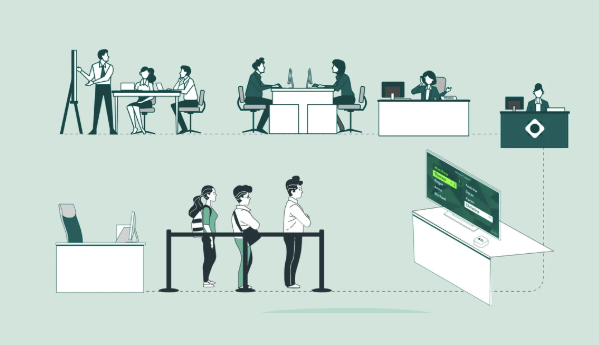
Waiting is one of the biggest drivers of customer dissatisfaction in service environments. Whether it is a bank branch, a hospital reception, a call centre, a retail billing counter, or an online support chat, customers judge the service not only by the final outcome but also by how long they had to wait and how predictable the wait felt. Queuing theory is a practical mathematical framework that helps organisations understand, measure, and reduce waiting time in a controlled way.
For Business Analysts, queuing theory is not about complex equations. It is about using structured metrics to define service problems, test improvement options, and quantify the business impact of staffing or process changes. Many professionals sharpen these decision skills through business analyst coaching in hyderabad, where real service scenarios are often used to connect mathematics with operational improvement.
What Queuing Theory Explains
The basic components of a queue
A queue forms when demand for service arrives faster than the service capacity can handle it. Queuing theory breaks this into measurable elements:
- Arrival rate: how many customers arrive per unit time
- Service rate: how many customers can be served per unit time
- Number of servers: staff members, counters, agents, or machines
- Queue discipline: the rule for who gets served first, such as first come first served
- System capacity: whether the queue can grow indefinitely or has limits
Even with simple inputs, you can estimate important outcomes like average waiting time, average queue length, and the chance that a customer must wait.
Why small changes can create big delays
One key insight from queuing theory is that when utilisation approaches full capacity, waiting time increases sharply. For example, if a service desk is busy almost all the time, even minor fluctuations in arrival patterns can cause long queues. This is why service systems designed with no buffer often fail during peak hours.
Key Measures Business Teams Should Track
Operational metrics that support decision making
A BA can translate queuing theory into operational tracking. The most useful measures include:
- Average waiting time before service begins
- Average time spent in the full system, including service time
- Average number of customers in the queue at a given time
- The probability that a customer will wait at all
- Maximum wait time during peak periods
These measures should be tracked by time slots, such as hour by hour, because peaks and troughs matter more than daily averages.
Business impact measures
Queue metrics become stronger when tied to business outcomes:
- Drop-off or abandonment rate
- Customer satisfaction scores
- Missed appointments or cancellations
- Lost sales at checkout or enquiry desks
- Overtime costs and staff burnout
When the analysis links wait time to revenue and customer experience, improvement proposals become easier to approve.
Common Queue Models in Service Environments
Single queue with a single server
This is the simplest setup, like one billing counter or one support agent. It is easy to analyse, but it is also sensitive to spikes. If arrivals increase even slightly, the queue grows quickly.
Single queue with multiple servers
Examples include bank branches with multiple tellers or a call centre with many agents. This setup generally reduces waiting time if demand is distributed well. It also supports flexible staffing, where more servers can be added during peak hours.
Multiple queues with multiple servers
This is common in retail stores where each counter has its own line. While it feels familiar, it often creates uneven waiting because one line may move faster than another. A single queue feeding multiple counters usually performs better because it balances demand across servers.
Priority queues
Hospitals and emergency rooms often use priority rules. High-priority customers are served first. The BA must then analyse two experiences: the reduced wait for urgent cases and the increased wait for standard cases. Documenting and communicating this trade-off is essential.
See also: cyberkannadig
How to Apply Queuing Theory to Reduce Wait Times
Step 1: Measure arrival and service patterns
Start with basic data:
- Number of arrivals per hour by weekday
- Average service time and its variation
- Staff availability and break schedules
- Peak times, seasonal surges, and special events
Even two weeks of accurate data can reveal patterns that are invisible in assumptions.
Step 2: Identify the bottleneck
A queue may form because:
- Service time is too long due to manual steps
- The number of servers is too low during peak hours
- The process creates rework, such as missing documents
- Systems are slow, increasing handling time
Instead of adding staff immediately, check whether service time can be reduced through process redesign.
Step 3: Test improvement levers
Practical levers include:
- Adding capacity only during peak hours rather than all day
- Moving simple requests to a self-service or express lane
- Standardising scripts and checklists to reduce service time variation
- Creating appointment slots for predictable demand
- Using digital tokens and estimated wait time displays to reduce perceived waiting
The best interventions are those that increase service rate or reduce variability without increasing costs too much.
Step 4: Define service-level targets
Set clear targets such as:
- 80 percent of customers are served within 5 minutes
- Average wait time below 3 minutes during peak windows
- Maximum wait is capped at 15 minutes with overflow handling rules
These targets guide staffing plans and process design choices.
Conclusion
Queuing theory offers a structured way to control customer wait times using measurable inputs like arrivals, service rates, and capacity. It helps teams move from guesswork to data-backed decisions, such as when to add staff, how to redesign flows, and how to set realistic service targets. For Business Analysts, the value lies in translating queue behaviour into practical recommendations that improve experience while controlling cost. If you are strengthening these analytical skills through business analyst coaching in hyderabad, queuing theory is a useful tool to include in your problem-solving toolkit for service operations and customer experience improvement.